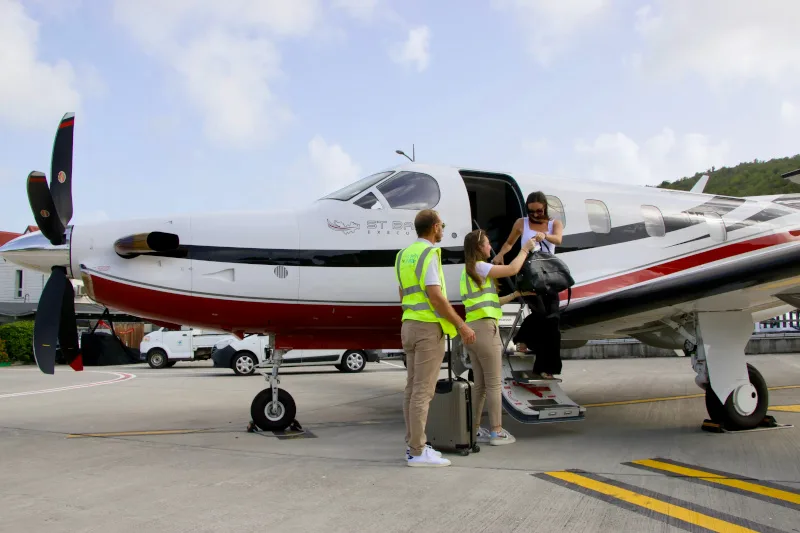
A proper VIP service at St Barth airport is the difference between a smooth island arrival and a chaotic, sweaty hour at one of the most technically demanding airstrips in the world. Rémy de Haenen Airport (SBH) is small, hot, lightly staffed, and built around a 646-meter runway that only certified pilots can use. There is no jet bridge, no business lounge, no priority lane. Independent travelers routinely lose luggage, miss transfers, or stand in the sun with three Rimowa cases and no plan. This guide walks you through exactly what to expect, and what I handle for you on the ground.
Why St Barts Airport Is Unlike Any Other
Rémy de Haenen Airport sits in a valley in Saint-Jean, with a steep hillside at one end and the beach at the other. Pilots clear a ridge at La Tourmente, drop hard onto the strip, and brake before the sand. Only twin-engine turboprops up to roughly 20 seats and a small list of approved light aircraft are authorized to land. There are no night operations: the airport closes at sunset, typically around 5:30 to 6:30 PM depending on the season.
The terminal itself is a single-story building with a handful of check-in desks, one small café, and an arrivals hall about the size of a tennis court. In high season (late December through early January, and again at Easter) that hall handles 1,500+ passengers a day with no climate control beyond ceiling fans and the trade wind through the doors.
A word for anyone who has watched the landing videos and is quietly dreading it, because I am asked this more than almost anything else. It is far less frightening from inside the aircraft than it looks from the hillside. The videos are shot from below, at the dramatic angle, and they are not what the approach feels like in your seat. The pilots flying it hold a special certification for this strip specifically. It is not a route anyone is handed casually. In practice most nervous passengers land slightly surprised at how ordinary it felt, and it becomes the story they tell at dinner.
This is why a St Barts VIP airport service is not a luxury upsell. For most yacht owners and villa guests, it is the only sane way to arrive.
IATA Code SBH and the Rémy de Haenen Airstrip
If you’re searching for what is St Barts airport code, the answer is SBH. The full ICAO code is TFFJ. The airport is named after Rémy de Haenen, the Dutch-born aviator who landed the first plane on the island in 1945 and later became its mayor.
Key specs to know:
- Runway length: 646 meters (2,119 feet)
- Runway designation: 10/28
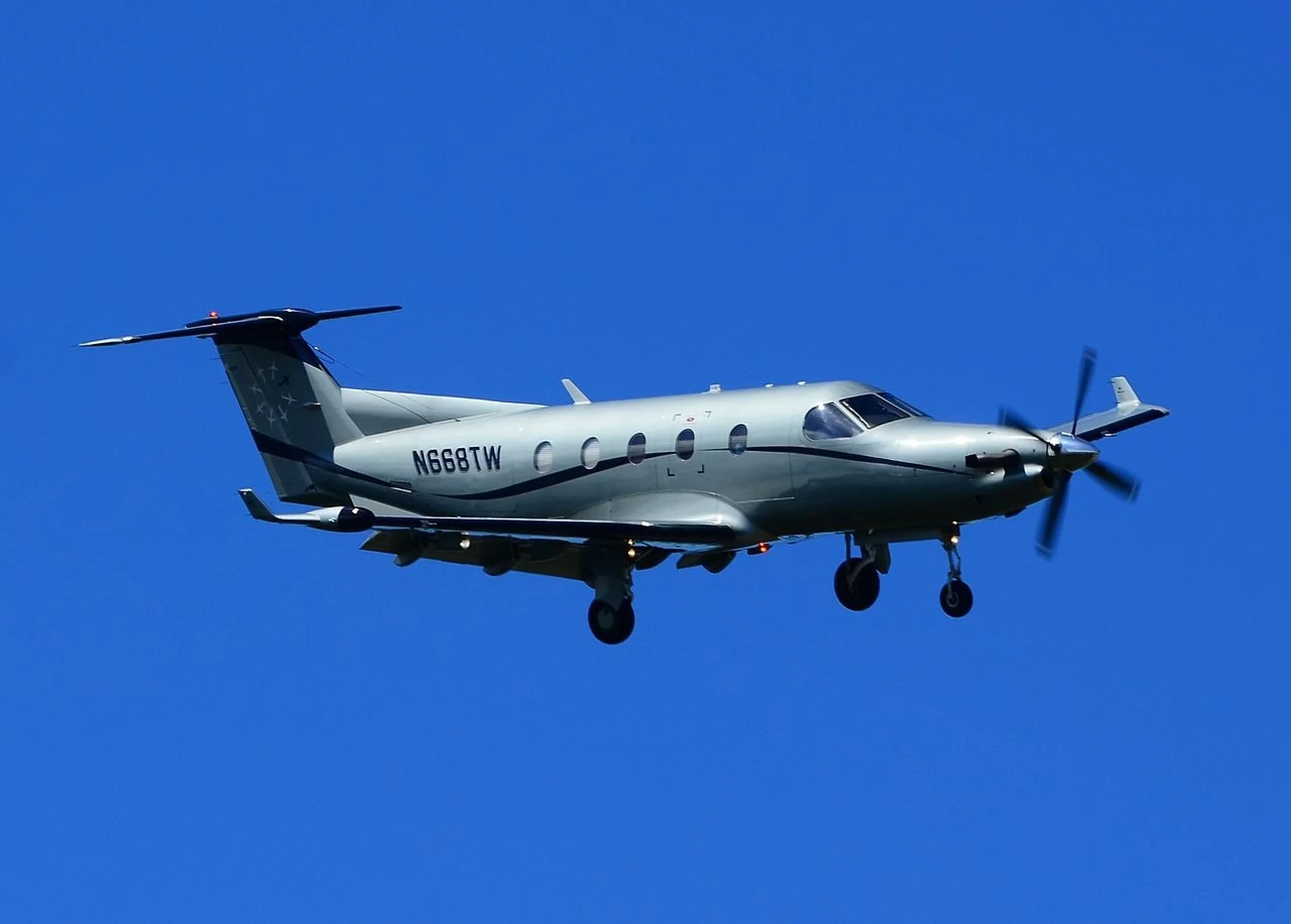
- Maximum aircraft: approximately 19 passengers (Twin Otter, Cessna Grand Caravan, Pilatus PC-12, BN-2 Islander)
- Tower hours: approximately 7:30 AM to sunset
- Special pilot certification required: yes. The approach is classified as one of the most difficult in commercial aviation
How to Fly to St Barts (Connections via St Maarten and Guadeloupe)
Yes, you can fly to St Barts, but not directly from North America or Europe. There are no transatlantic or US-direct flights into SBH. Every arrival is a connection.
The two viable paths:
Via St Maarten (SXM)
This is the standard route. Long-haul carriers fly into Princess Juliana International Airport (SXM) from New York, Miami, Paris, Amsterdam, and several European hubs. From SXM, you connect to St Barts on a 10 to 12 minute hop with Winair, St Barth Commuter, or by private charter. Winair operates the most frequent inter-island schedule, with up to 10 daily rotations in high season.
Via Guadeloupe (PTP)
Air France and Air Caraïbes fly Paris to Pointe-à-Pitre, where St Barth Commuter and Air Antilles connect onward. This route is preferred by French travelers and during US holiday peaks when SXM is saturated.
Private jet to SXM, then transfer
Most ultra-high-net-worth guests fly private into SXM (which can handle Global 7500s, G650s, BBJs) and then either take a 10-minute helicopter transfer to SBH or board a pre-arranged Pilatus or Twin Otter charter. The handoff between jet and inter-island aircraft is where a concierge earns the brief: bags, customs, FBO clearance, and the connection are all on a tight clock.
What a VIP Airport Service Actually Includes
A real St Barts VIP airport service is not just someone holding a sign. It is a coordinated handling operation. Expect:
- Pre-arrival flight tracking on both the long-haul and inter-island legs
- Tarmac access pass for the greeter (regulated, limited, must be arranged in advance)
- Personal meet at aircraft door on arrival
- Luggage retrieval and porter handling: bags transferred directly to your vehicle
- Immigration and customs facilitation (St Barts is a French overseas collectivity; entry rules follow Schengen logic for most nationalities)
- Climate-controlled vehicle waiting curbside, not in the public lot
- Coordination with your villa manager, yacht captain, or hotel for synchronized arrival
- Departure mirror service: check-in handled, bags weighed and tagged before you arrive, security walk-through escorted
Pricing depends on the scope: one-way arrival at SBH only, bilateral handling that adds meet-and-greet at SXM and the terminal transfer, group size, vehicle, and helicopter coordination if needed. I send a clear quote upfront once your flights are confirmed.
Tarmac Meet-and-Greet: Step by Step
One point of precision first, because it is the part guests ask about. Tarmac access here is regulated and limited. It is not something a concierge simply walks into. The person who meets you on the apron is my greeter or the handling agent I engage for your arrival, cleared and named in advance with the airport authority. That is how the access works on this island, and I would rather describe it accurately than imply I stroll onto the runway.
Here’s what a proper handover looks like when you step off the aircraft at SBH:
- Wheels down plus 30 seconds: Your greeter is already on the apron, identified by name to the ground crew, having cleared the tarmac access protocol with airport authority that morning.
- Aircraft door opens: You are greeted by name as you descend the steps. No sign, no scrum.
- Walk to terminal: About 80 meters across the apron. The greeter walks ahead with a porter to start the bag pull from the aircraft hold.
- Inside the arrivals hall: You bypass the queue at the small immigration desk; paperwork is often pre-cleared with the agents on duty.
- Bags consolidated: Tagged, counted, and rolled out to the curb in under 4 minutes for a typical four-person family.
- Vehicle ready: Engine on, AC running, cold towels and water in the back. Door opened, bags loaded, brief on transfer time given.
The whole sequence (wheels down to vehicle moving) takes 8 to 12 minutes. Without VIP handling, the same process can stretch to 45 minutes in high season.
Baggage Handling and Customs Assistance
Inter-island flights into SBH have strict baggage limits: typically 20 kg checked and 5 kg carry-on on Winair and St Barth Commuter, with anything heavier requiring a separate cargo flight or paid excess. This catches first-timers off guard constantly.
What I handle:
- Pre-flight bag manifest: Reviewing your luggage list before you fly, splitting heavy bags onto a separate cargo rotation if needed
- Cargo retrieval: Some bags arrive on a different flight; I track them and deliver them to your villa later that day
- Customs declarations: Wine, watches, fine art, and items above the EU declaration threshold need a form; I prepare it
- Lost or delayed bags: Coordinated tracing across SXM, Air France, and Winair systems, a process that’s nearly impossible to manage in person from the island
Now the expectation I would rather set myself, because it is the single most common surprise of the whole arrival. Bags do not always land with you, and VIP handling does not change that. The inter-island aircraft are small, weight is managed flight by flight, and when a bag does not make your rotation it comes on a later one, sometimes not until the following day. In my experience it happens on roughly one arrival in six.
What matters is that this is a delay, not a loss. In practice the bags turn up; I track them and deliver them to the villa whenever they land. But anyone selling you a VIP service on the promise that your luggage is guaranteed beside you at the door is overselling something they do not control. The practical protection is unglamorous and it works: put a night’s essentials, medication and swimwear in your cabin bag, and the delay becomes an anecdote instead of a problem.
Private Transfer from the Airport to Your Villa
The airport sits in Saint-Jean. Your villa is probably in Lurin, Pointe Milou, Gouverneur, Colombier, or Marigot. Drive times range from 7 minutes (Saint-Jean) to 25 minutes (Colombier), on narrow, steep, single-lane roads with hairpin turns.
A pre-booked private transfer from the airport to your villa or hotel means a vehicle sized correctly for your party and luggage (Mercedes V-Class, Range Rover, or Defender for larger families), driven by someone who knows every blind corner on the island.
For multi-stop arrivals or guests who want a dedicated vehicle and driver for the full stay, a chauffeur service waiting at the terminal is the cleaner option: same vehicle, same driver, on call from arrival through departure.
Helicopter Arrivals: The Ultimate Entrance
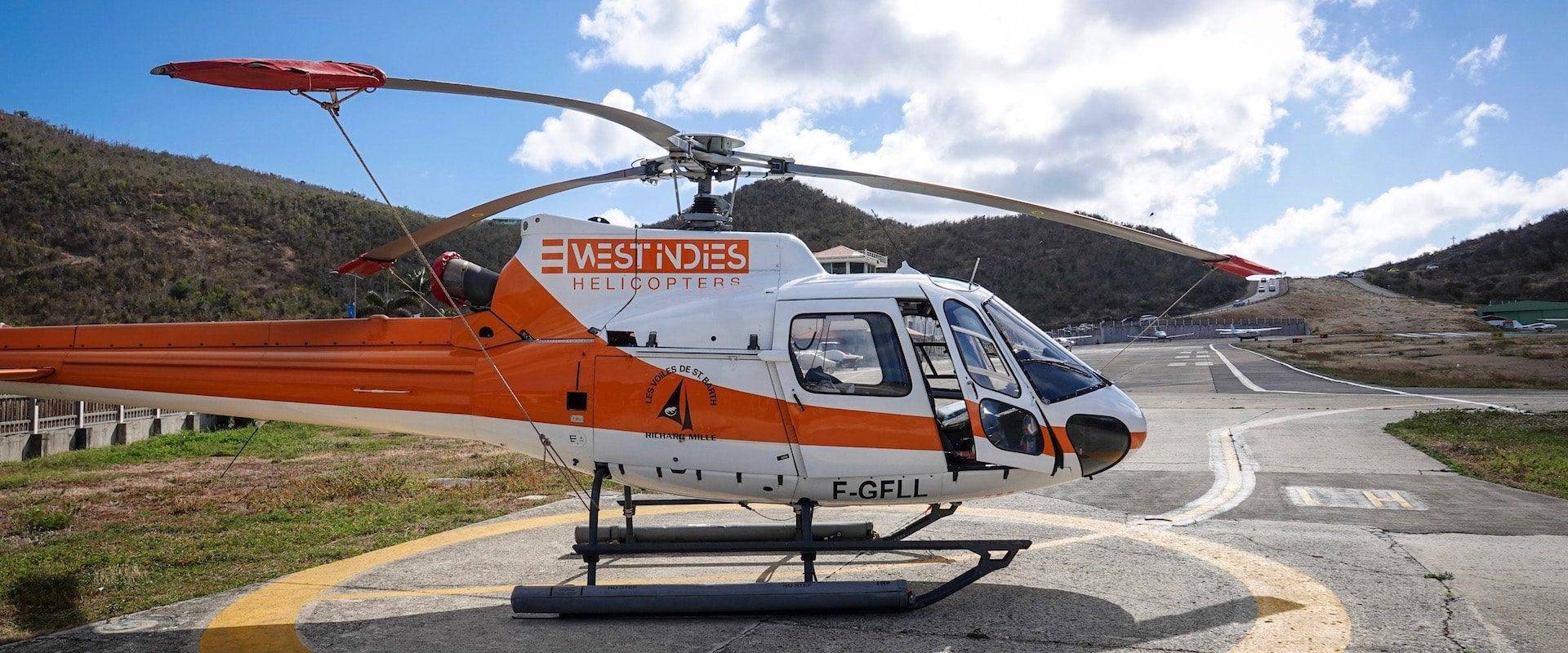
For guests arriving on a private jet to SXM, the 10-minute helicopter transfer to St Barth is the cleanest connection on the planet when it’s coordinated properly.
What it looks like:
- Your jet lands at SXM’s FBO (Signature or TLC Aviation)
- Bags transfer directly from jet to helicopter: no terminal, no customs queue at SXM
- 10-minute flight over the channel and the cliffs at La Tourmente
- Helicopter lands at SBH’s helipad, adjacent to the main terminal
- French immigration is processed at SBH on arrival
- I meet you at the pad, vehicle 30 seconds away
Helicopters serving the SXM-SBH route typically carry up to 4 or 5 passengers plus light luggage. Heavier bags follow on a fixed-wing cargo flight, coordinated on my end.
When the Planes Don’t Fly: Wind, Sunset, and the Way Out by Sea
This is the part of arriving in St Barth that nobody puts on a website, and it is the part I get called about.
There are a handful of days each year when the aircraft simply do not fly. Usually it is wind, sometimes it is something else, and the decision is not negotiable: this is a 646-meter strip between a ridge and a beach, and when conditions are wrong, nothing lands and nothing leaves. No amount of money or status changes that, and you should be suspicious of anyone who implies otherwise.
The second constraint is structural rather than occasional: the airport closes at sunset. There are no night operations at all. A long-haul flight that lands late at SXM does not connect to St Barth by air that evening, no matter how it looked when you booked it. This catches people out constantly, because it is not how airports work anywhere else they travel.
In both cases the answer is the same, and it is the sea. Guests cross to and from St Maarten by ferry, or by private boat. The ferry runs on its own schedule and is the straightforward option. A private boat is the one that saves a connection, and it is worth being precise about what that means: arranging one last-minute, in under an hour, is possible when a boat is free. I have done it, in both directions, leaving from SXM and from St Barth. I am not going to promise it, because it depends on a captain and a hull that belong to someone else. But it exists, it works, and it is the reason a cancelled flight is usually an inconvenience here rather than a lost day.
What this means practically: if your onward connection out of SXM is tight, tell me before you travel rather than when the flight is cancelled. The options are much better at nine in the morning than at four in the afternoon.
First-Time Visitor Mistakes to Avoid
The patterns are predictable. Avoid these:
- Booking the latest SXM connection of the day. Miss it and you’re overnight in Sint Maarten; SBH closes at sunset.
- Bringing more than 20 kg per person on the inter-island flight. Excess gets bumped to cargo at the airline’s discretion, which can mean a 24-hour delay.
- Assuming taxis are available at the airport. They are, but in high season the queue is 30+ minutes and supply is limited.
- Not pre-clearing customs for valuable items. An undeclared high-value watch or piece of jewelry is a real problem.
- Skipping the concierge to “save money.” The math doesn’t work. A missed connection, a cargo-bumped suitcase, or a 90-minute taxi wait costs more in time and stress than the entire VIP fee.
How to Book VIP Airport Assistance in St Barts
Book at least 72 hours before arrival in low season, and 2 weeks ahead for Christmas, New Year’s, or Easter weeks: tarmac access permits and quality drivers both run out.
When booking, send me:
- Full flight details for both long-haul and inter-island legs
- Passenger names exactly as on passports
- Number and approximate weight of bags
- Villa or hotel address and check-in time
- Special handling notes (pets, child seats, medical equipment, fragile items)
- Departure flight details if you want round-trip handling
I confirm in writing, monitor your flights from the moment you push back at JFK or CDG, and adjust the ground operation in real time. That’s the actual product you’re paying for. For the full arrival logic from US gateways, see also the how to get to St Barth guide.