Local Guide

Where to Stay
in St Barth

I live here and I place villas. The areas, the hotels as I would describe them to a friend, and when a hotel is honestly the better trip.

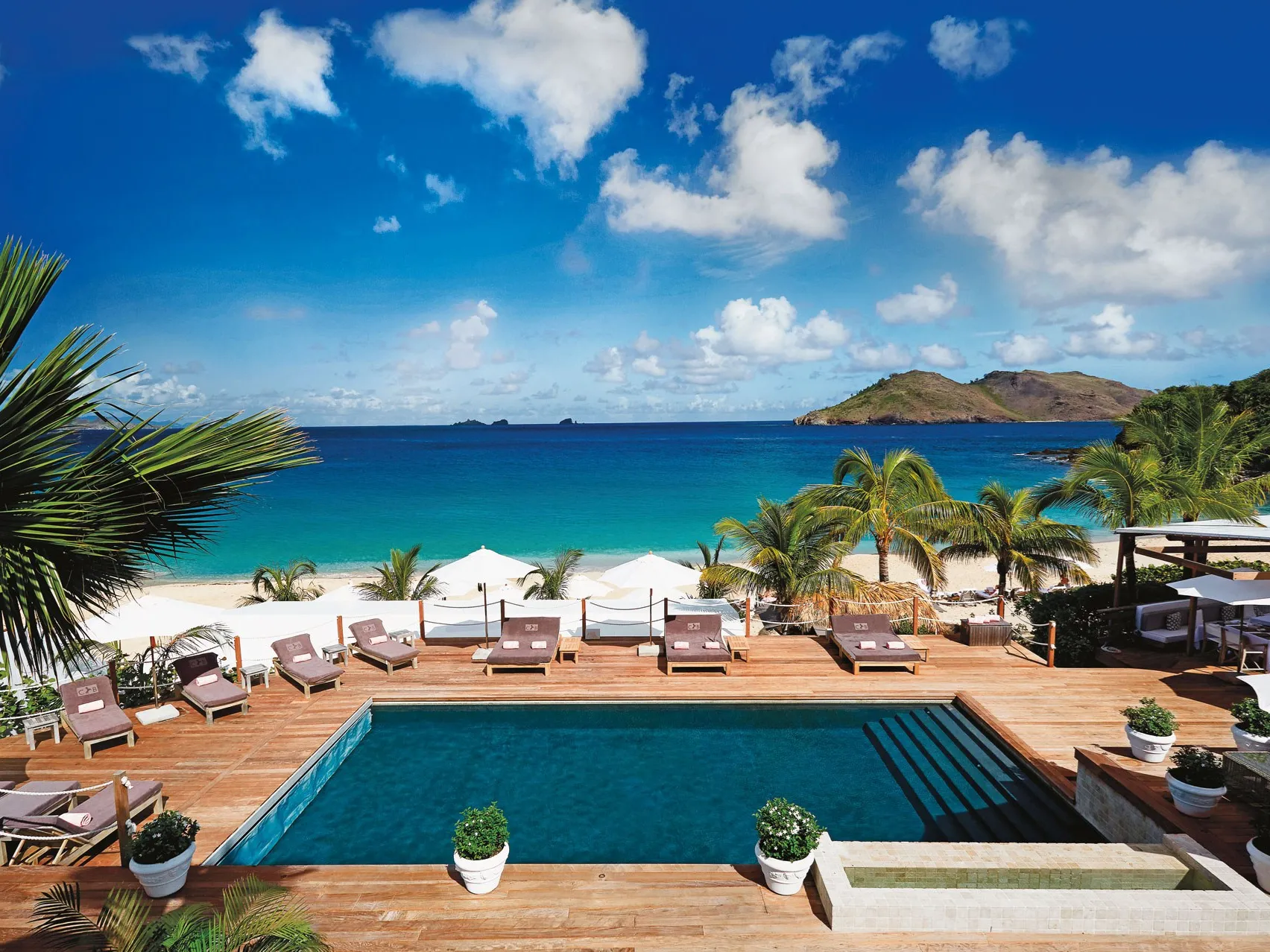
Cheval Blanc St Barth on Flamands beach

Where you stay in St Barth shapes the whole trip. The island is small and nothing is far, but each corner has its own mood, and the choice between a hotel and a villa depends on who is coming and for how long. This page covers both: the hotels of Saint Barthélemy as I would describe them to a friend, and the way I think about the areas when someone asks me where to base themselves.

Hotel or private villa: how to decide

Two of you, or four, for less than a week: a good hotel is often the better trip. Everything is there, the beach, the restaurants, someone at the desk, and nothing to organise. A bigger group, a family, or a week or more: a private villa usually gives you more for the money, more privacy, and your own kitchen, pool and terrace. The island has far more villas than hotel rooms, from two-bedroom houses on the hill to ten-bedroom estates with full staff.

The full comparison: villa or hotel, and where each one wins

The hotels of St Barth

Eden Rock (St Jean)

Eden Rock sits on the rock that splits St Jean beach in two. It is the hotel everyone has seen in photos: bungalows each done differently, two restaurants on the sand (the Sand Bar is one of them), and the planes landing over the beach next door. For guests who want the life of St Jean with a hotel looking after them.

Cheval Blanc St-Barth (Flamands)

Cheval Blanc is at one end of the long beach of Flamands. Big grounds, two restaurants (La Cabane on the beach, La Case for the serious dinner), a Guerlain spa, and a reputation as one of the best hotels in the Caribbean. For guests who want quiet and polish, away from St Jean.

Le Toiny

Le Toiny is on the wild south-east side, on the hill above Toiny bay, with the wind and the open ocean in front. The suites have their own small pools looking at the sea, and the restaurant is one of the best dinners on the island. For guests who want calm above everything, and the biggest view on the island.

Le Sereno (Grand Cul-de-Sac)

Le Sereno is on the lagoon at Grand Cul-de-Sac. Calm, modern, built around the water. For couples and small families who want a flat, swimmable beach and a quiet base.

Le Barthélemy (Grand Cul-de-Sac)

Le Barthélemy is the other big hotel on Grand Cul-de-Sac, on the same lagoon. Modern and calm, and it works well for a longer stay. Very good with families because of the sheltered water.

Rosewood Le Guanahani (Grand Cul-de-Sac)

Rosewood Le Guanahani sits on the point between Marigot bay and Grand Cul-de-Sac, with two beaches of its own. Bigger than most hotels here, with a proper gym and spa. A good choice for families, for three generations travelling together, and for long stays.

The villas

St Barth has more villas to rent than almost anywhere else in the Caribbean, from two bedrooms on a hillside to ten bedrooms with full staff. Most come with a housekeeper every day, the pool looked after, and a manager you can call. On top of that I add what you want: a private chef, a butler, the fridge filled before you land, or a dinner set up on the terrace.

Many of the most beautiful houses are never listed online. The owners rent them to people they know, through people they know, and because I know them I can ask. If you would rather browse first, YourStBarth lists houses you can book direct, and LuxuryVillasStBarth lets you reserve with the help of an AI assistant.

On a first trip

St Jean is the easiest place to start. You can walk to the beach, to the casual restaurants, the surf shops and the boutiques, and even to the airport, which is a feature here: the planes come in low over the beach and everyone stops to watch. On a first trip, St Jean means you plan less and see more.

With young children

Grand Cul-de-Sac is the safest beach for small children: a shallow turquoise lagoon, almost no waves, warm water all year. The two hotels on it (Le Barthélemy, Le Sereno) are used to families, and many villas around the lagoon open straight onto the beach. St Jean is the second choice, for families with older children who want more going on.

As a couple

Flamands and Lurin. Flamands for the long sandy beach, with Cheval Blanc at one end and quiet villas all around. Lurin for the hill: the sunset over Gustavia from your own terrace, for couples who would rather have the view than walk to a beach.

A group, or a yacht crew

For eight or more, Lurin and Gouverneur have the biggest houses: six to ten bedrooms, several terraces, sometimes two pools, and room for the staff a big dinner needs. For yacht crews who want a base on land, a villa above Gustavia keeps you walking distance from the harbour and the restaurants.

For the evenings

Gustavia is the only place with a real evening. The restaurants and bars sit around the harbour and most of the late night stays within a few streets, so staying in or near town means you walk home after dinner instead of driving. Lorient also has one of the island’s late-night cabaret venues.

To be left alone

Toiny and Gouverneur. Both far from everything, neither with a beach club, and the houses spread out on the hills. This is where guests go who want nobody around, no scene, and a view that makes you forget what day it is.

How to decide where to stay, in the right order

Full disclosure first: I place villas. I earn on a villa booking and nothing on a hotel. That is precisely why I put the questions below in this order: your constraints decide, not the houses I have to rent. And the honest starting point is that for two people travelling alone, a hotel is usually the better trip: a front desk solves more small problems than an empty living room, and breakfast without a car trip is worth more than it sounds.

Short answer before the method: length of stay and group size move this decision far more than the view does. A few nights with a small group, stay central, on the Gustavia–St-Jean axis, and buy back driving time. A longer trip, or a full house, and the quiet side stops being a cost.

1. Who is travelling. Settle this first, because it settles the type before it settles the area, and the type narrows the map. Answer it last and you end up rearranging your week around a place you already committed to.

2. How long you stay. Under four or five nights, every drive is taken out of the trip itself, so accept a busier address that puts you near the port and the airport side. On a longer stay, isolation you pay for on day two is the reason you came by day nine.

3. Car, and how many. Almost everyone needs one. The question people forget is how many. One car for eight people in one house means someone is always waiting. Ask about the driveway as well, because several are steep enough that a low car struggles, and parking near the port and at the busier beaches is genuinely limited around midday.

4. Beach on foot, or beach by car. This is the mistake that’s hardest to undo. Some of the most desirable addresses on the island have no beach you can walk to at all (the heights and the rocky points included), and one beach is reached only on foot, a solid walk in and out. If walking to the sand before breakfast matters to you, say it out loud and make it a filter, not a hope.

Then the questions almost nobody asks and plenty of people regret.

Are the bedrooms equivalent? In many houses one room is a proper master and the others are noticeably smaller, sometimes in a separate pavilion reached by outdoor stairs. Two couples sharing should ask for a plan, and for which bathrooms are ensuite.

Which way does the terrace face, and is it on the windward side? The east and north-east coasts get real, constant wind. Pleasant for sleeping, less so for dinner outside.

How far is the nearest grocery, and who answers in the evening when something stops working?

One practical warning: in high season this decision is close to final. Moving mid-stay is rarely possible, and the car and the restaurant tables are booked well ahead too. Spend the time before you commit, not after.

I only have a few nights: where should I base myself?

Stay central, on the Gustavia–St-Jean axis, and accept that it is busier. On a short trip the roads are the hidden cost: the island is small but hilly, and a quiet address far from everything turns a large part of your evenings into driving. Save the remote, panoramic side for a longer stay, when the emptiness becomes the point rather than a commute.

Do I really need to rent a car in St Barth?

In almost every case, yes. The island is small but hilly, and the roads are narrow and steep in places. The better question is how many cars for your group: one vehicle for a full house means constant waiting. Reserve the car when you reserve the stay, especially in high season, and check that the villa’s driveway suits the vehicle you booked.

Can I change where I’m staying once I’m on the island?

It is very difficult in high season. Availability is thin, and the place you would prefer is rarely free on the exact dates you want to switch. Treat the choice as final and do the thinking before you confirm. The same applies to the rental car and to restaurant tables, both commonly reserved well before arrival. Off-season there is more room to adjust.

How far ahead should I book?

For the Christmas and New Year period, as early as you can. The island fills, and by then you are choosing from what is left rather than from what you wanted. High season generally rewards booking well ahead, and the car and the restaurant tables follow the same pattern. Outside those weeks there is real flexibility, and it is the one time it makes sense to decide slowly.

Ask me directly

Frequently asked questions

What is the best area to stay in St Barth?

It depends on the trip. St Jean is the easiest on a first visit (the beach, the restaurants and the airport on foot). Flamands and Lurin for couples (quieter, the beach or the view). Grand Cul-de-Sac for families (a calm, sheltered lagoon). Gouverneur and Toiny if you want to be left alone.

What are the best hotels in St Barth?

Eden Rock (St Jean), Cheval Blanc (Flamands), Le Toiny (on the hill above Toiny bay), Le Sereno and Le Barthélemy (both on the lagoon at Grand Cul-de-Sac), and Rosewood Le Guanahani (Grand Cul-de-Sac). They are very different from each other, and the right one depends on the area you want and the kind of trip.

Should I rent a villa or stay at a hotel in St Barth?

For two or four of you on a short trip, a hotel is often the better choice. For a group, a family, or a week or more, a villa gives you more for the money, more privacy and more freedom. The island has far more villas than hotel rooms, including houses that are never listed and that I can ask for directly.

How early should I book accommodations in St Barth?

For high season (mid-December to April), 6 to 9 months ahead. For Christmas, New Year and Carnival, the best houses go 12 months ahead. For May, June and November, 4 to 6 weeks is usually enough.

Are there all-inclusive resorts in St Barth?

No. The hotels sell the room, with or without breakfast and dinner. Villas come with the housekeeping, not the meals. If you want a chef at the villa, I book one.

Is St Barth dog-friendly?

Some hotels and villas take dogs. To bring one in you need an EU pet passport, a current rabies vaccination and a declaration on arrival. I check the rule of the house you choose and help you with the paperwork.

Find the right stay
in St Barth

Send me your dates, how many you are and the kind of trip you have in mind. I tell you hotel or villa, which area, and I find the house, listed or not.

Message on WhatsApp

Plan the rest of your trip